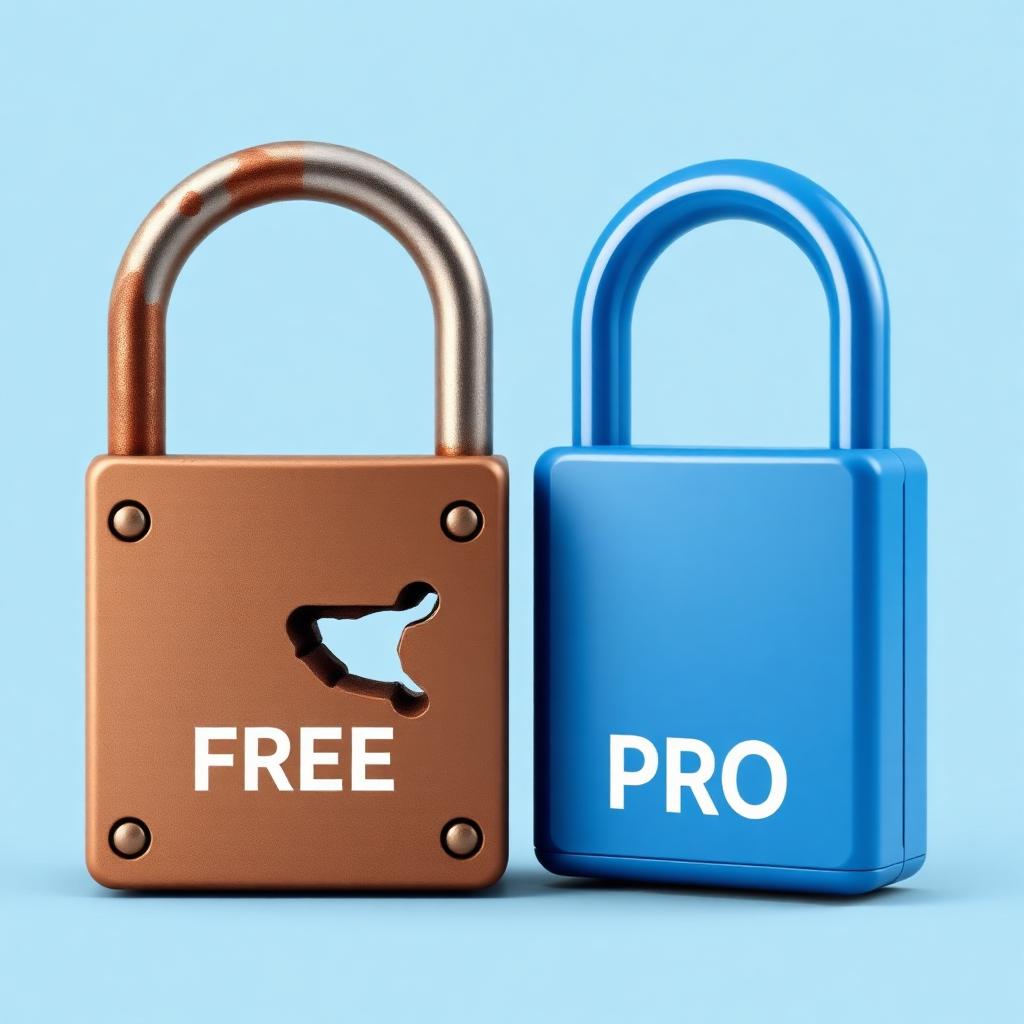
"Free VPN" is one of the most frequent searches in this category. The reasoning is understandable: why pay for something that appears to be available at no charge? In the case of VPN services, however, the word "free" generally conceals a considerably higher cost.
How a "free" VPN sustains its business
Operating servers in dozens of countries is expensive. If you are not paying with money, the revenue typically comes from selling user data to advertisers. Independent research has consistently shown that the majority of free VPN services collect browsing history, inject advertisements or — in more extreme cases — resell user bandwidth.
The practical limitations of free VPN services
- Capped speeds — frequently unusable for high-definition streaming.
- Data quotas — typically 500 MB to 10 GB per month, which is quickly exhausted.
- Limited server selection — generally insufficient to unblock major streaming platforms.
- No meaningful customer support — users are largely on their own when issues arise.
- Activity logging — directly contrary to the purpose of a privacy-oriented VPN.
How to choose an appropriate VPN provider
A reputable paid VPN typically costs between USD 3 and USD 5 per month on a multi-year commitment. In return, subscribers receive a verified no-logs policy, AES-256 encryption, thousands of servers, reliable access to major streaming platforms, and round-the-clock customer support.
When shortlisting a provider, prioritise those that have commissioned independent security audits, are headquartered in a privacy-friendly jurisdiction, and offer a genuine money-back guarantee so you can evaluate the service risk-free.
A simple guiding principle
If the tool you are evaluating is intended to protect your privacy, it is advisable not to select one whose business model depends on monetising that very privacy. A modest monthly subscription buys genuine peace of mind.
A calmer, more private online life is genuinely within reach
Most meaningful improvements to your digital privacy come from a small number of habits: encrypted connections, unique passwords, two-factor authentication and up-to-date devices. None of them require technical expertise — only consistency.
Continue reading
Public Wi-Fi: Why Your Data Is at Risk and How to Protect It
Airports, cafés, hotels — free Wi-Fi networks are a frequent target for attackers. This guide explains what really happens on these networks and outlines the practical measures that make a difference.

Accessing Netflix US, Disney+ JP and Other Catalogues from Abroad in 2026
Streaming libraries differ from one country to another. This guide explains how to access the content you are entitled to, wherever you happen to be, without any technical setup.